
Planetary Boundaries Breached as Global Warming Nears Key 1.5°C Threshold
Global warming continues to reach critical thresholds, as a series of major reports and scientific findings released by the United Nations Environment Programme (UNEP) confirm….
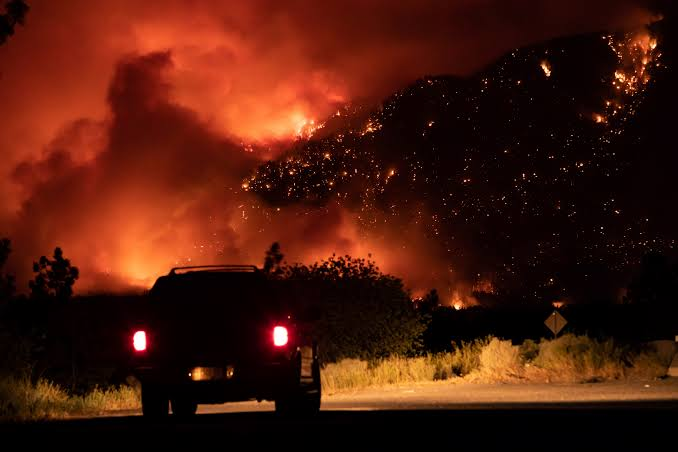
A series of major reports and scientific findings released by the United Nations Environment Programme (UNEP) and leading research institutions confirm that global average temperatures are on the verge of consistently crossing the critical 1.5°C warming threshold established by the Paris Agreement. Coupled with new data showing severe pressure on fundamental planetary life-support systems, environmental experts urge immediate, sustained action to curb greenhouse emissions and avoid irreversible ecological tipping points.
The 1.5°C Milestone and UN Warnings
In a landmark assessment, the UN Environment Programme detailed that global warming is set to exceed the 1.5°C limit above pre-industrial levels within years if current emission trajectories persist. The report highlights that heatwaves, extreme weather events, and hydrological disruptions are intensifying globally, affecting millions of lives and destabilizing regional economies.
UNEP Executive Director Inger Andersen stressed that crossing this threshold increases systemic risks, though overshoot scenarios can still be managed if global emissions drop rapidly and continuously. The priority for international bodies remains enforcing deep decarbonization pathways while expanding adaptive measures for climate-vulnerable communities.
Deterioration of Planetary Boundaries
Adding to the climate outlook, the annual Planetary Health Check warned that human activities have pushed key planetary boundaries far outside the safe operating space necessary for human flourishing.
                                  [ SAFE ZONE ]
                                 /             \
                   Stratospheric Ozone     Atmospheric Aerosols
                                \             /
                                 [ DANGER ZONE ]
          -------------------------------------------------------------
          • Climate Change               • Biosphere Integrity
          • Freshwater Systems           • Land Use Change
          • Ocean Acidification          • Biogeochemical Flows
          • Novel Entities (Pollutants)
Out of nine critical planetary boundaries evaluated by scientists:
- Seven boundaries remain in the danger zone, including climate change, freshwater systems, ocean acidification, biosphere integrity, and land-use change.
- Only two systems—stratospheric ozone and atmospheric aerosol loading—have shown localized stabilization or structural improvement over the past decade.
Researchers warn that critical carbon sinks, such as the Amazon rainforest, face heightened risks of severe transformation. If such biomes transition into savanna-like ecosystems, the planet’s natural ability to absorb carbon dioxide will diminish, further accelerating global temperature rise.
Shifts in Ocean Dynamics
Recent oceanic studies published by the Woods Hole Oceanographic Institution reveal significant shifts in macro-climate patterns. Research confirms that global warming is disrupting a 400-year-old climate link between the Indian and Pacific Oceans.
Historically, atmospheric and sea-surface interactions between these two ocean basins moved in synchronized cycles, regulating rainfall, monsoons, and tropical weather patterns across multiple continents. Contemporary data indicates that human-driven greenhouse gas emissions have overwhelmed this natural coupling, causing unpredictable atmospheric shifts that complicate global weather forecasting and climate adaptation plans.
Global Implementation and Policy Roadmaps
Following the COP30 negotiations in Belém, international focus has shifted to the execution of multi-trillion-dollar climate goals. Countries and international coalitions are advancing several strategic frameworks leading into COP31:
- Fossil Fuel Transition Roadmaps: Formulating structured policies for transitioning away from fossil fuel energy systems in an equitable manner.
- Deforestation Commitments: Implementing targeted mechanisms aimed at halting and reversing forest degradation by 2030.
- Climate Finance Alignment: Mobilizing the Baku to Belém Roadmap, which targets $1.3 trillion in climate finance to support adaptation and mitigation in developing economies.
While updated Nationally Determined Contributions (NDCs) submitted by participating countries show incremental progress, current targets remain below the 57% reduction in global emissions needed by 2035 to fully stabilize global warming within safer limits.
Immediate Next Steps
Global climate strategies emphasize a dual focus: accelerating energy grid decarbonization through clean technology deployments while scaling up climate adaptation infrastructure. Strengthening resilience across agriculture, coastal management, and urban infrastructure remains essential to protecting livelihoods as extreme climate events become more frequent.
The Role of Technological Innovation in Climate Mitigation
Addressing the systemic challenges of global warming requires rapidly scaling up clean technology deployments alongside traditional conservation efforts. Advances in renewable energy storage, green hydrogen production, and direct air carbon capture offer promising pathways to accelerate grid decarbonization. Furthermore, integrating artificial intelligence and predictive modeling into climate science helps urban planners optimize energy efficiency and strengthen community resilience against severe climate events.